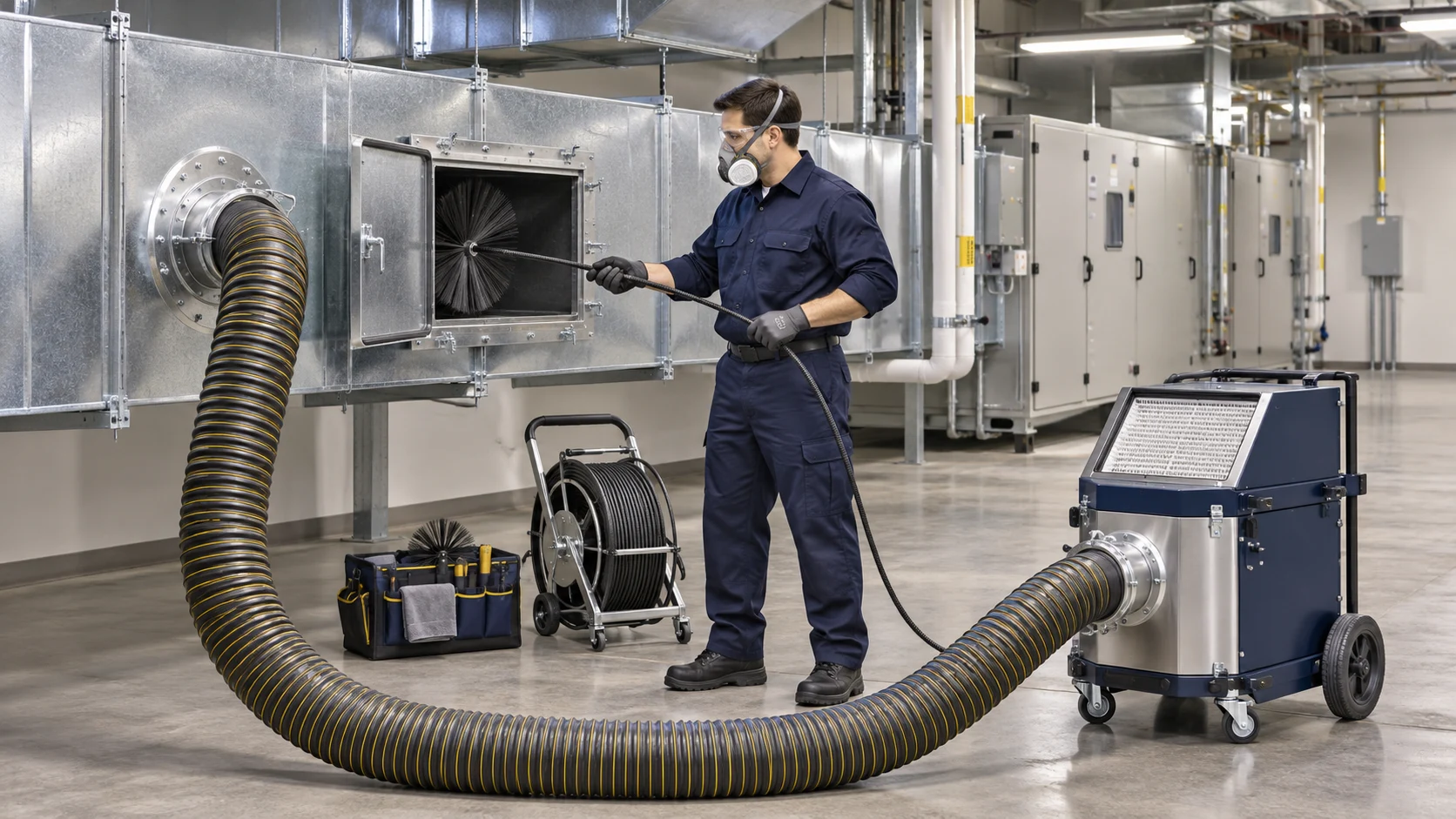
From the return grille to the blower compartment, we assess access, system materials and buildup before recommending a cleaning scope.
01 /
Air Duct Cleaning
Remove accumulated dust and debris from accessible supply and return ductwork using mechanical agitation and collection equipment suited to the system. We protect work areas and review access points before cleaning.
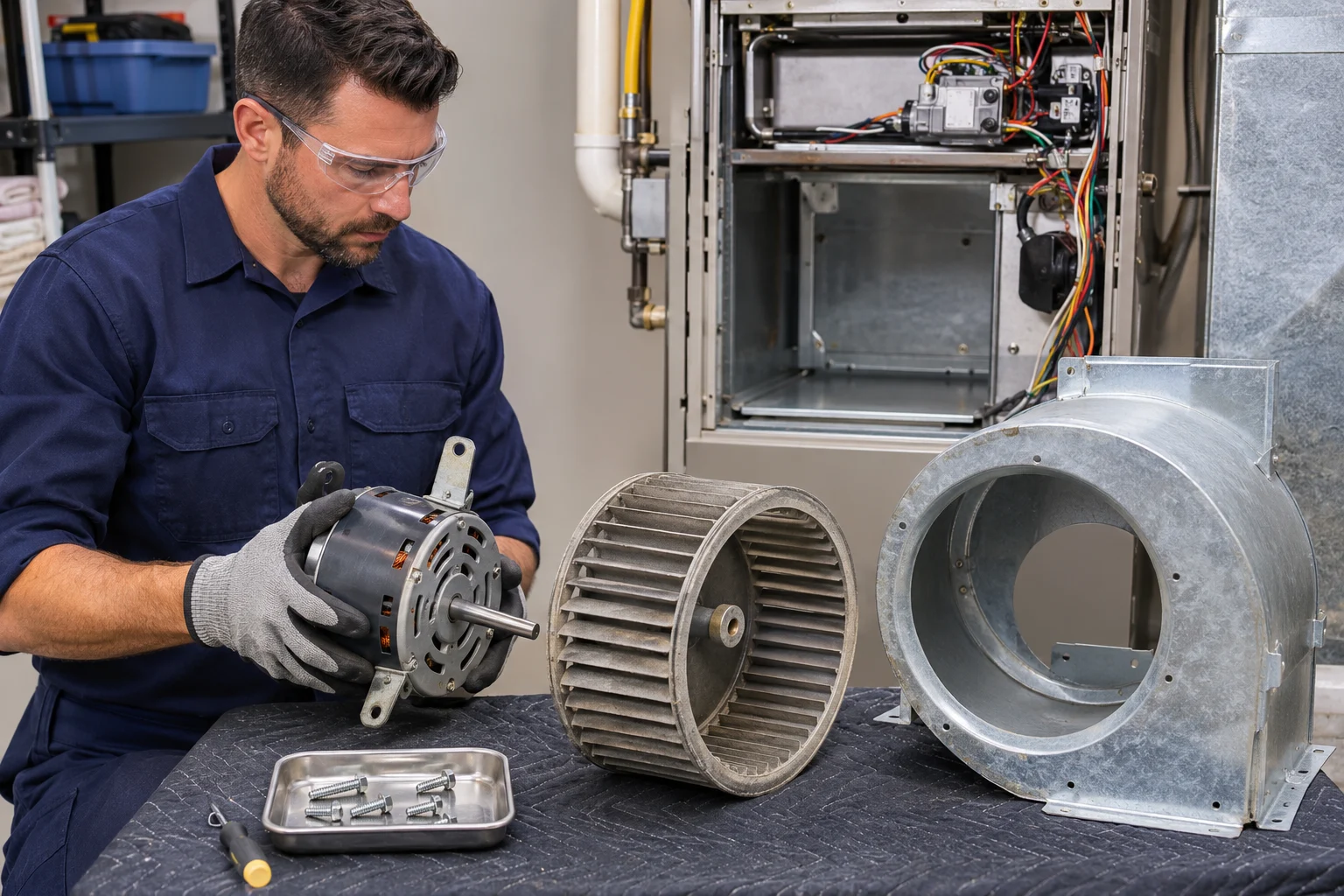
Inspect the blower wheel, housing and surrounding compartment. Where the equipment allows, remove and disassemble the blower assembly for detailed cleaning, then reassemble and check operation within the agreed scope.
Clean accessible air-handling components and interior surfaces identified during inspection. The scope may include the cabinet, blower compartment and accessible coil surfaces where suitable for the equipment.
Remove and clean accessible registers, grilles and return covers where practical. We address dust at accessible openings and reinstall covers after cleaning.
Plan cleaning around your building’s layout, equipment access and operating schedule. We review the areas to be serviced with the property manager before work begins.
When appropriate for the documented scope, a treatment may be applied only to compatible surfaces using a product labeled for that use. Fogging is considered only when the label permits the method and application conditions.
AI-generated service illustration · Not an actual job photograph
Beyond the grille
Give the blower the attention it needs.
Dust and debris can collect on the blower wheel and inside the housing. Our cleaning scope considers these internal surfaces alongside the connected ductwork.
For mold concerns inside furnace compartments, HVAC units and duct systems, the work begins with your independent mold assessor’s findings.
01
Review & inspect
Review the laboratory results and assessor’s written recommendations. Inspect accessible HVAC components, moisture concerns, system materials and access needs against that scope.
02
Protect & isolate
Protect the work area and isolate the affected system. Set up containment and filtration as specified for the project, then open or disassemble components for access.
03
Clean & remediate
HEPA vacuum and detail-clean salvageable surfaces using methods appropriate to each material. Remove or replace affected materials that cannot be adequately cleaned as required by the scope. Use treatments only where specified and suitable.
04
Reassemble & document
Reassemble serviced components and document the work with photographs. Coordinate post-remediation assessment or clearance with your mold assessor where required before returning the system to service.
Moisture sources must also be addressed to reduce the likelihood of recurrence. A visual inspection alone cannot identify mold species.
Getting started
Tell us about your system.
We’ll help you understand the next step for your property.
Share your property type, location, system details and the concerns you’re noticing.
2
Review the cleaning scope
We assess access and conditions, then explain the recommended work and estimate before starting.
3
Schedule your service
Plan access and timing with our team. For mold remediation, have your assessor’s documents ready for review.
Common questions
Before we arrive.
Do you clean both homes and commercial buildings?
Yes. We offer residential and commercial duct and HVAC cleaning in Westchester County, NY and Fairfield County, CT. The scope depends on equipment, system condition and safe access.
Can you remediate mold inside my HVAC system?
We review mold remediation projects involving HVAC units, furnace compartments and air duct systems. Before every project, we require your mold laboratory results and the written recommendations from your mold assessor.
Is duct fogging part of every cleaning?
No. Mechanical cleaning is central to removing dust and debris. Any treatment is considered separately for the documented scope, surface material and product label. Fogging is used only where the label permits that application method. Biocides are not used on internally insulated ducts unless a product is specifically registered and labeled for that use.
What should I have ready for an estimate?
Your property address, the number and type of HVAC systems, known access issues and a description of your concerns. For mold remediation, also provide your mold assessor’s laboratory results and written remediation recommendations through the secure method arranged with our team.
Mold Air Care
Let’s take a closer look at your HVAC system.
Serving homes and commercial properties in Westchester County, NY & Fairfield County, CT.